Using CBD for Post-Workout Recovery: What You Need to Know
Leg day hits, you wake up sore, and you still have classes, CBD may help you feel more relaxed* and support healthy recovery from exercise especially when you’re also sleeping, drinking water, and eating real meals.
If you’re curious, here’s what you’ll get in this guide: a breakdown of what CBD is, what it can’t promise, and how students usually use it after training. Think two main routes: topical CBD (like a cream you rub on) or an oral option like CBD oil or CBD gummies. Neither option is a shortcut, and it won’t replace sleep, hydration, and good nutrition.*
What is post-workout recovery (and why do you feel sore)?
You finish a workout, you feel great, and then the next day your legs feel stiff. That “day-after” feeling is normal for a lot of people.
When you train hard, your muscles go through tiny changes. Some people call them “micro-tears.” Your body then repairs that tissue over the next day or two. That repair process is part of post-workout recovery.
What is DOMS?
DOMS stands for delayed onset muscle soreness. It’s that slow-building soreness that usually shows up 12–48 hours after a new workout, heavier weight, or lots of reps.
DOMS is a normal training response. It doesn’t always mean you “did something wrong.”
What actually helps recovery every time?
A few basics show up again and again because they work.
-
Sleep: This is the big one. More sleep usually means you feel better the next day.*
-
Protein: Helps your body rebuild after training.*
-
Hydration: Even being a little dehydrated can make you feel worse.*
-
Active recovery: A light walk, easy bike, or stretching can help you loosen up.*
None of this is fancy. It’s just the stuff that adds up.
How does CBD relate to exercise recovery (what it interacts with)?

If you’re adding CBD to your routine, it helps to know what it connects to in your body.
Your body has a built-in network called the endocannabinoid system (ECS). Think of it like a cell-signaling system. It helps different parts of your body “talk” and stay balanced.
What is the endocannabinoid system (ECS)?
The endocannabinoid system (ECS) is made of receptors and natural compounds your body makes. These signals play a role in things like mood, rest, appetite, and how your body reacts after physical stress from exercise.
CBD doesn’t “flip a switch” the same way a stimulant does. It’s more like a gentle nudge to the system. That’s why people often describe feeling more relaxed* rather than “wired.”*
CBD vs THC (why CBD doesn’t intoxicate)
THC is the part of cannabis that causes a high.
CBD does not make you feel high. That’s why many students use CBD after workouts when they still need to study, drive, or go to class.
Does CBD help healthy recovery from exercise*? What research suggests?
People talk about CBD for workouts because they want to feel better after training.* The honest answer is: the research is still growing.
According to early research and expert reviews, CBD may be linked with relaxation* and better rest* for some people. But results can vary a lot from person to person.
CBD and DOMS: what we know vs what we don’t
What we do know: many people use CBD after training to feel calmer* and to help with a smoother wind-down at night.* That can matter because sleep is a huge part of recovery.*
What we don’t know yet: there isn’t one “perfect” answer for DOMS. Training style, sleep, food, everyday stress levels, and the product you use all change the outcome.
So if you’re trying. CBD for post-workout recovery* keep expectations realistic. Think of it as a possible add-on, not a replacement for sleep and nutrition.*
CBD and training stress:* keep the wording compliant
Hard training can cause stress on the body. That’s a normal part of training stress.
Some people use CBD because they like the way it feels during recovery more relaxed* and less “on edge” after intense sessions.* But it’s not a medical treatment, and you shouldn’t treat it like one.
Best ways to take CBD for fitness recovery
There are a few best ways to take CBD for fitness. The “best” choice usually depends on your schedule and what you prefer.
CBD oil vs gummies: what feels different (onset + convenience)
CBD oil is flexible. You can measure your serving easily. Many people like it because it fits into a simple routine.
CBD gummies are easier when you’re on the go. You don’t have to measure anything. You just take one and move on.
So for CBD oil or gummies for recovery*, it often comes down to: do you want more control (CBD oil) or more convenience (CBD gummies)?
Timing: before or after a workout?
Most people use CBD after a workout, because the goal is to wind down and relax afterward. If you’re using it before training, it’s usually for staying calm not for energy.
A simple way to think about it: pre-workout is for your training plan. Post-workout is for your recovery routine.*
Simple dosing basics (non-medical)
There isn’t one perfect CBD oil post-workout dosage for everyone. Body size, training load, and your product strength all matter.
A simple approach many people use is “start low, go slow.” That means:
-
Start with a small amount.
-
Stick with it for a few days.
-
Increase slowly if you’re not noticing the relaxed feeling you want yet.*
If you’re new, keep it simple. Track how you feel after workouts and sleep. That’s the feedback that matters most.*
Topical CBD for muscle and joint recovery: how it’s used
If you don’t want an oral product, topical CBD is a popular option. This is where people often look for topical CBD for post-workout muscle comfort.*
You apply it to the area you trained. Think quads after squats, shoulders after push day, or calves after a run.
Do CBD topicals enter your bloodstream?
Topicals are generally used on the skin where you apply them. People like them because they feel local and simple.*
If drug testing matters to you, be cautious with any cannabinoid product. Labels can be wrong, and small traces can happen.
If you choose a THC-free option made with CBD isolate, however it is not guaranteed that you will pass a drug test after consuming this product..*
What to look for in a topical (CBD amount, texture, botanicals)
When you’re picking a topical, focus on practical stuff:
-
How much CBD is in the container (total mg).
-
Texture: light lotion vs thicker balm.
-
Added ingredients: some people like botanicals, menthol, or other “cooling” sensations.
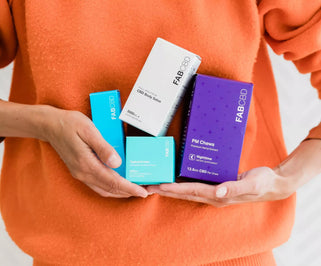
Fab CBD Cream is an example of a topical that’s made to feel light and non-greasy. It includes 1000 mg full-spectrum CBD, plus aloe and cocoa butter, with a blood orange scent.
Fab CBD Salve is thicker and waxier than a cream. It uses menthol and camphor for a stronger “fire and ice” feel, and it comes in 1000 mg and 3000 mg options.
CBD and sleep quality after workouts
If recovery is a group project, sleep is the person doing most of the work.
Why sleep affects soreness and performance
Sleep is when your body does a lot of repair and reset. When sleep is short or broken, you usually feel it in your mood, your energy, and your next workout.*
Even if your training is perfect, recovery gets harder when sleep is messy.
CBD at night: what people use it for (calm + wind-down)
A lot of people use CBD at night because it may help them feel calmer* and more relaxed* before bed. That can make it easier to settle into a routine that leads to more restful sleep*.
Keep the goal simple: a smoother wind-down, not a “knockout.”*
FAQ
Does CBD help with post-workout muscle soreness (DOMS)?
CBD may help you feel more relaxed* during recovery, but results vary and the research is still growing. DOMS is normal, and basics like sleep, hydration, and protein still matter most.*
How much CBD should I take after a workout?
There isn’t one perfect CBD oil post-workout dosage for everyone. Many people start low and increase slowly over time based on how they feel.*
Is CBD oil or a CBD topical better for recovery?
CBD oil and topical CBD can fit different routines, and the best choice is the one you’ll actually use consistently.* Oil is flexible, while topicals feel more targeted to the area you apply them.*
Can CBD support sleep quality after workouts?
Many people use CBD at night because it may help them feel calmer* and more relaxed*, which can make a wind-down routine easier.* It’s not a sleep cure, and good sleep habits still matter.*
Is CBD allowed for athletes?
In many cases, CBD is treated differently from THC, but policies vary by league and can change. Check WADA and NCAA guidance for your exact situation.
*This statement has not been evaluated by the Food and Drug Administration. This product is not intended to diagnose, treat, cure, or prevent any disease.*
Recent Articles

How to Store CBD Products Properly: Oils, Gummies, and Topicals Explained

What’s CBG? How’s It Different From CBD?

CBD for Dogs: A Comprehensive Guide to Quality, Safety, and How it Works

Using CBD for Post-Workout Recovery: What You Need to Know